Price range: $95.00 through $175.00
Description
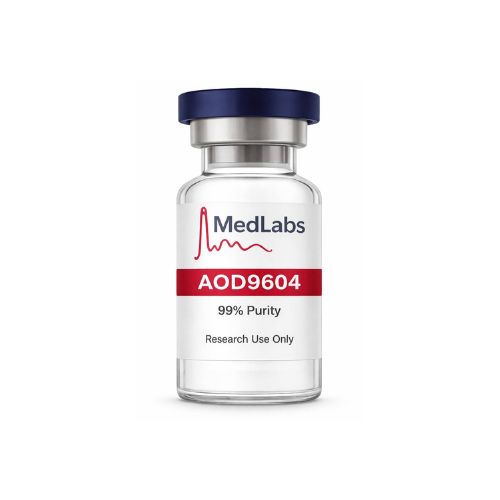
AOD9604 Peptide (Advanced Obesity Drug 9604) – Research-Grade Fat Metabolism Peptide
AOD9604 is a synthetic peptide fragment derived from the C-terminal region of human growth hormone (hGH), specifically amino acids 176–191, with an additional tyrosine residue for enhanced stability. Originally developed to isolate hGH’s fat-burning properties without its growth-promoting effects, AOD9604 peptide is widely studied for its ability to stimulate lipolysis (fat breakdown), inhibit lipogenesis (fat storage), and support metabolic research without affecting blood glucose or IGF-1 levels.
How AOD9604 Peptide Works in Fat Metabolism Research
Selective Lipolytic Action Without Hormonal Side Effects
Unlike full-length human growth hormone, AOD9604 does not bind to the hGH receptor nor elevate IGF-1 levels. Preclinical research demonstrates that AOD9604 upregulates beta-3 adrenergic receptor expression in adipose tissue, enhancing lipolytic sensitivity and promoting the breakdown of stored triglycerides into free fatty acids available for energy use. A foundational study published in the International Journal of Obesity found that both hGH and AOD9604 significantly reduced body weight gain in obese mice while increasing fat oxidation and plasma glycerol levels yet AOD9604 did not induce hyperglycemia or impair insulin secretion.
Inhibition of Fat Formation
Beyond stimulating fat breakdown, AOD9604 peptide is believed to suppress lipogenesis by inhibiting key enzymatic pathways involved in new lipid accumulation. This dual-action mechanism promoting fat oxidation while limiting new fat storage makes it a valuable tool for studying adipose tissue biology and metabolic regulation.
Regenerative Research Applications
Emerging research has expanded interest in AOD9604 beyond fat metabolism into tissue repair and joint health. A 2015 study in a rabbit osteoarthritis model demonstrated that intra-articular injections of AOD9604 enhanced cartilage regeneration, and combined treatment with hyaluronic acid produced superior results compared to either treatment alone. Additional investigations suggest potential implications for wound healing, collagen synthesis, and bone remodeling, positioning AOD9604 as a versatile research peptide across multiple domains.
Research Applications & Potential Benefits
Fat Metabolism and Obesity Research
AOD9604 was originally developed as an anti-obesity drug candidate. While human clinical trials showed mixed outcomes including an average loss of 2.6 kg over 12 weeks in one study compared to 0.8 kg in placebo the peptide continues to be studied for its selective effects on adipose tissue without the diabetogenic side effects of full hGH therapy. As noted in analyses by peptide research platforms like Meto’s clinical review, AOD9604 is distinct from GLP-1 medications like semaglutide it targets fat-cell signaling directly rather than suppressing appetite.
Cartilage and Joint Health Studies
Research has transitioned AOD9604 into regenerative medicine applications, particularly for osteoarthritis and cartilage repair. Studies indicate that AOD9604 may offer therapeutic benefits comparable to or exceeding Bone Marrow Aspirate Concentrate (BMAC) and Platelet-Rich Plasma (PRP) therapy. The peptide appears to promote proteoglycan synthesis and extracellular matrix remodeling, making it relevant for investigating degenerative joint conditions.
Metabolic Health Without Glucose Disruption
One of the most significant advantages of AOD9604 peptide is its neutral effect on glucose metabolism. Multiple studies confirm that AOD9604 does not elevate IGF-1 levels or impair insulin sensitivity, distinguishing it from full-length growth hormone and making it a safer alternative for metabolic research protocols.
Usage Guidelines & Research Protocols
Standard Research Dosing
-
Typical research dose: 250–500 mcg once daily via subcutaneous injection
-
Clinical research protocols have tested 250 mcg to 1 mg daily with no additional benefit observed above 1 mg
-
Timing: Morning administration in a fasted state for optimal lipolytic effect
-
Cycle length: Typically 12–24 weeks depending on research goals
Reconstitution and Storage
-
Reconstitute lyophilized AOD9604 powder with bacteriostatic water
-
Store refrigerated at 2–8°C
-
Reconstituted solutions should be used within 30 days
-
Protect from light and moisture; properly sealed shelf life extends to 24 months
Formulation Considerations
-
Maintain pH between 5.5–7.0 for optimal stability
-
Avoid combining with strong acids or chelating agents
-
Compatible with hyaluronic acid for joint research protocols
Frequently Asked Questions
What is AOD9604 and how does it differ from HGH?
AOD9604 is a synthetic 16-amino acid peptide fragment derived from the C-terminal region of human growth hormone (specifically amino acids 176–191 with a stabilizing tyrosine addition). Unlike full HGH, AOD9604 does not bind to the hGH receptor, does not stimulate IGF-1 production, and does not affect blood glucose levels. This makes it a highly selective research tool for studying fat metabolism without the growth-promoting or diabetogenic effects associated with growth hormone therapy.
Does AOD9604 really work for fat loss?
Research evidence is mixed. A 12-week randomized trial reported average weight loss of 2.6 kg with AOD9604 compared to 0.8 kg with placebo. However, a larger 24-week trial of 536 subjects failed to demonstrate significant weight loss, leading to the discontinuation of the drug’s development for obesity treatment in 2007. Importantly, these trials tested an oral formulation; some researchers hypothesize that injectable administration may produce different results, though robust clinical data remains limited.
Is AOD9604 safe for research use?
Clinical trials involving over 900 participants demonstrated that AOD9604 was well-tolerated with minimal adverse effects, primarily mild injection-site reactions. Unlike full hGH, it does not induce hyperglycemia, impair insulin sensitivity, or elevate IGF-1 levels. However, some trials reported 118 adverse events among participants, three deemed severe, and long-term safety data remains incomplete. For additional safety context, resources like the Victory Select peptide overview provide comprehensive safety summaries.
Is AOD9604 FDA-approved?
No. AOD9604 is not approved by the FDA or any major regulatory body for human therapeutic use. It is sold strictly for research purposes only. While the oral form received GRAS (Generally Recognized As Safe) status from the FDA, this designation does not constitute approval for medical treatment. As noted by peptide industry analysts, no authority recognizes AOD9604 as an active treatment for obesity or weight loss.
Is AOD9604 banned in sports?
Yes. AOD9604 is prohibited by the World Anti-Doping Agency (WADA) under the S0 category (non-approved substances) because it is not approved for human therapeutic use. Athletes should not use this peptide under any circumstances.
How should I store AOD9604 powder?
Store lyophilized AOD9604 powder in an airtight container at 2–8°C (35–46°F), protected from light and moisture. Under optimal conditions, shelf life is 24 months. Once reconstituted with bacteriostatic water, refrigerate solution and use within 30 days.
Can AOD9604 be combined with other peptides?
Research suggests AOD9604 may be studied alongside other metabolic peptides such as semaglutide or tirzepatide for comparative fat metabolism investigations. However, these combinations remain experimental and should only be conducted under strict research protocols with appropriate oversight. Always consult formulation guidelines before combining peptides.
What’s the difference between oral and injectable AOD9604?
AOD9604 is available in both oral and injectable formulations for research purposes. Most human clinical trials tested oral administration (1 mg daily), while preclinical animal studies and current research protocols typically use subcutaneous injection (250–500 mcg daily). The injectable route may offer higher bioavailability, though no head-to-head comparative studies exist. As emphasized by the Oxford Scientist’s peptide analysis, no validated dosing standards exist in medical literature.
Additional information
| Strength | 5mg, 10mg |
|---|
Related products
-
Semaglutide
Price range: $25.00 through $125.00 Select options This product has multiple variants. The options may be chosen on the product page -
Tirzepatide
Price range: $45.00 through $315.00 Select options This product has multiple variants. The options may be chosen on the product page -
Survodutide
Price range: $135.00 through $525.00 Select options This product has multiple variants. The options may be chosen on the product page -
HGH Fragment 176-191
$110.00 Select options This product has multiple variants. The options may be chosen on the product page
Reviews
There are no reviews yet.