$50.00
Description
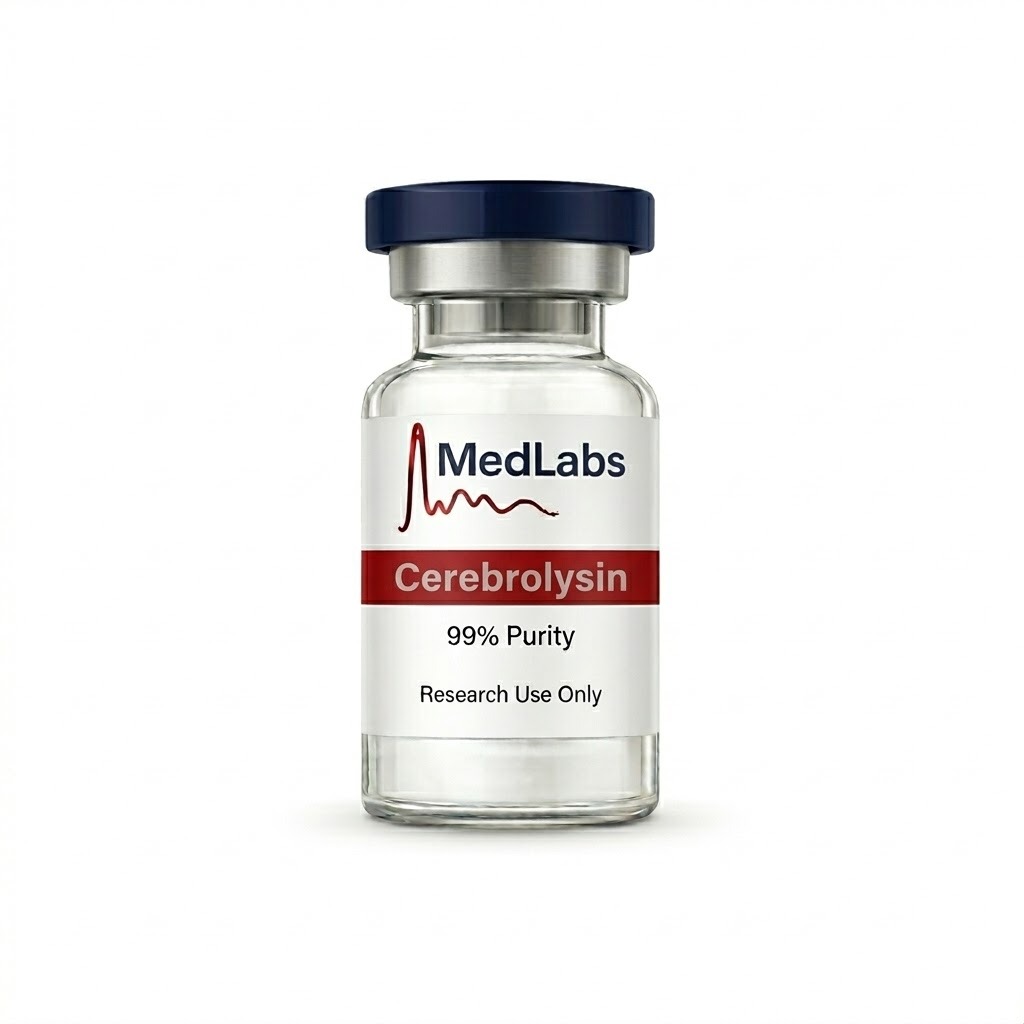
Cerebrolysin: Advanced Neuropeptide Preparation for Cognitive Function & Neurological Research
Cerebrolysin is a multimodal neuropeptide preparation derived from purified porcine brain proteins through standardized enzymatic breakdown. It mimics the action of endogenous neurotrophic factors, providing both immediate neuroprotection in acute scenarios like stroke and traumatic brain injury, and long-term neurorestoration by fostering neuroplasticity and neurogenesis. With over 70 human clinical studies and decades of hospital use for conditions including Alzheimer’s disease and stroke recovery, Cerebrolysin is widely recognized as one of the most extensively researched neuropeptide preparations in clinical medicine.
Key Benefits of Cerebrolysin Neuropeptide
Neuroprotection & Neuroregeneration
Cerebrolysin exerts potent neuroprotective effects by reducing glutamate-induced excitotoxicity, inhibiting neuronal necrosis and apoptosis, and maintaining the structural integrity of neurons under detrimental conditions. In animal models of cerebral ischemia, Cerebrolysin reduced infarct volume, inhibited edema formation, stabilized microcirculation, and doubled the survival rate while normalizing lesion-related neurological deficits.
Cognitive Enhancement & Synaptic Plasticity
Cerebrolysin directly influences neuronal and synaptic plasticity, thereby improving learning ability and cognitive performance. Quantitative EEG studies of both healthy volunteers and patients with vascular dementia demonstrate dose-dependent increases in neuronal activity (alpha and beta frequencies) after 4 weeks of treatment. Research indicates that Cerebrolysin ameliorates ketamine-mediated anxiety and cognitive impairments via modulation of mitochondrial function and the CREB/PGC-1α pathway, supporting its potential for broader cognitive applications.
Stroke Recovery & Traumatic Brain Injury (TBI)
A landmark 2025 meta-analysis of 14 randomized controlled trials involving 2,884 patients demonstrated that Cerebrolysin significantly improves neurological recovery following acute ischemic stroke, with a mean difference in NIHSS score change of +1.39 compared to placebo. The large-scale CREGS study, involving over 1,800 patients with acute ischemic stroke, confirmed that Cerebrolysin treatment led to significant improvement in functional recovery as measured by the modified Rankin Scale and NIH Stroke Scale. Cerebrolysin is recognized in the Canadian ERABI guideline as a 1b recommendation for improving attentional function in patients with moderate to severe TBI.
Alzheimer’s Disease & Vascular Dementia
Clinical studies confirm that Cerebrolysin demonstrates neuroprotective properties with measurable improvements in cognitive function and overall clinical condition in patients with Alzheimer’s disease. Approximately 60-70% of dementia patients respond positively to Cerebrolysin therapy, with improvements evident in objective cognitive abilities and activities of daily living within just two weeks of treatment initiation. Cerebrolysin is particularly beneficial for patients with more severe Alzheimer’s disease, showing meaningful improvements in cognition.
Usage Guidelines & Research Protocols
Clinical Dosing Protocols (Research Reference)
Based on established clinical trial data and prescribing information from approved regions:
-
Stroke: 20-50 mL per day for 10-21 days via slow IV infusion
-
Traumatic Brain Injury: 20-50 mL per day for 7-30 days via slow IV infusion
-
Alzheimer’s Disease: 10-30 mL per day for 5 days weekly (1 cycle), with 2-4 cycles per year recommended
-
Vascular Dementia: 10-30 mL per day for 5 days weekly (1 cycle), with 2-4 cycles per year recommended
-
Cognitive Enhancement Research: Protocols range from 5-10 mL per day via intramuscular injection for 4 weeks to several months, typically followed by cycling off periods
Administration Routes
Cerebrolysin is administered exclusively by injection either intramuscular (IM) for lower doses or intravenous (IV) infusion for higher therapeutic doses. Oral administration is not effective because the peptide fragments are broken down in the digestive tract before reaching systemic circulation. Doses up to 5 mL can be injected undiluted IM, and up to 10 mL can be injected through IV injection slowly over 3 minutes. Doses between 10-50 mL are recommended as slow IV infusion.
Storage & Handling
Store Cerebrolysin in a cool, dark environment between 15-25°C (59-77°F). Protect from light. Once the ampoule is opened, use immediately. Diluted solutions should be used within 24 hours when stored at room temperature. Always use disposable one-way IV infusion sets and cannulas. Flush with 0.9% NaCl solution before and after infusion.
Frequently Asked Questions: Cerebrolysin Peptide
What is Cerebrolysin and how does it work?
Cerebrolysin is a neuropeptide preparation produced by the standardized enzymatic breakdown of purified porcine brain proteins. It comprises a mixture of low-molecular-weight peptides and free amino acids that mimic the action of endogenous neurotrophic factors including BDNF (brain-derived neurotrophic factor), NGF (nerve growth factor), GDNF, and CNTF. This allows Cerebrolysin to simultaneously modulate four critical neurobiological processes: neurotrophicity, neuroprotection, neuroplasticity, and neurogenesis a multimodal approach that distinguishes it from single-target interventions.
What are the primary benefits of Cerebrolysin for research?
Cerebrolysin supports multiple research pathways:
-
Neuroprotection: Reduces glutamate excitotoxicity, inhibits apoptosis, and protects neuronal structural integrity
-
Neurogenesis: Enhances neurogenesis in the dentate gyrus, providing a basis for neuronal replacement therapy
-
Synaptic Plasticity: Directly influences neuronal and synaptic plasticity, improving learning and memory formation
-
Cognitive Recovery: Improves cognitive function in dementia models and post-stroke rehabilitation protocols
-
Mitochondrial Function: Modulates mitochondrial function and the CREB/PGC-1α pathway to alleviate anxiety-like behaviors and cognitive deficits
Is Cerebrolysin safe and well-tolerated?
Cerebrolysin has an extensive safety record spanning decades of clinical application, post-marketing surveillance studies, and double-blind, placebo-controlled clinical trials. According to EMA (European Medicines Agency) classification, Cerebrolysin is in the SAFE category. Reported adverse drug reactions are generally transient and mild in intensity, including occasional headache, dizziness, or mild injection site reactions. A comprehensive 2025 meta-analysis of 14 randomized controlled trials found no significant differences in serious adverse events or mortality between Cerebrolysin and placebo groups.
What are the contraindications for Cerebrolysin?
Cerebrolysin is contraindicated in individuals with:
-
Hypersensitivity to any component of the preparation
-
Epilepsy, particularly grand mal convulsions (Cerebrolysin treatment may increase seizure frequency)
-
Severe renal impairment
Special precautions should be taken for individuals with allergic diathesis or epileptic conditions.
How is Cerebrolysin administered?
Cerebrolysin is administered exclusively via parenteral routes either intramuscular (IM) injection for lower doses (up to 5 mL) or intravenous (IV) infusion for higher therapeutic doses (10-50 mL). It cannot be taken orally, as the peptide fragments are broken down in the digestive tract before reaching systemic circulation. The components of Cerebrolysin can cross the blood-brain barrier, with neurotrophic activity detectable in blood plasma up to 24 hours after a single application.
How does Cerebrolysin compare to other nootropic peptides?
Cerebrolysin is distinguished by its extensive clinical validation it has the strongest clinical backing among nootropic peptides, with over 70 human clinical studies and decades of hospital use for conditions including Alzheimer’s disease and stroke recovery. Unlike single-compound nootropics that target one neurotransmitter pathway, Cerebrolysin delivers a cocktail of bioactive peptides that mimics the effects of multiple endogenous growth factors simultaneously. Compared to nasal spray peptides like Semax and Selank, Cerebrolysin typically provides more profound effects for neurological recovery and neuroregeneration, though it requires injection administration rather than the convenience of nasal delivery.
What is the duration of a typical Cerebrolysin research protocol?
Research protocols typically involve treatment courses lasting 10-30 days, depending on the condition being studied. For acute conditions like stroke or TBI, 10-21 days of daily treatment is standard. For chronic neurodegenerative conditions like Alzheimer’s disease, researchers often implement cycles of 5 days per week for 4 weeks, with 2-4 cycles administered per year. Many researchers recommend cycling off periods between treatment courses to maintain optimal receptor sensitivity and prevent tolerance development.
Can Cerebrolysin be combined with other peptides?
Cerebrolysin has been studied in combination with other neurotrophic compounds, though caution is advised. It should not be mixed with balanced amino acid solutions during infusion, as this may alter the peptide composition or reduce efficacy. Some researchers stack Cerebrolysin with complementary peptides like Semax or Selank in alternating protocols, but such combinations should be approached conservatively and with careful monitoring. Always follow established safety protocols and consult relevant literature before combining compounds
Additional information
| Strength | 60mg |
|---|
Related products
-
Melatonin
$40.00 Select options This product has multiple variants. The options may be chosen on the product page -
Pinealon
Price range: $50.00 through $130.00 Select options This product has multiple variants. The options may be chosen on the product page -
Semax
Price range: $50.00 through $70.00 Select options This product has multiple variants. The options may be chosen on the product page -
DSIP
Price range: $50.00 through $130.00 Select options This product has multiple variants. The options may be chosen on the product page
Reviews
There are no reviews yet.